Managing pharmaceutical rebates can involve a lot of moving pieces—from reviewing data and identifying exceptions to generating invoices and keeping track of what has already been processed.
For organizations already managing complex programs and reporting requirements, those additional administrative steps can quickly become time-consuming.
At TriYoung, Inc., we believe technology should make these processes easier, not add another layer of work. That’s why we developed our new Rebate Management System (RMS): a centralized tool designed to help organizations streamline and manage their rebate workflow.
Bringing Rebate Management Into One Workflow
TriYoung’s Rebate Management System works with CAREWare data to support the quarterly rebate process.
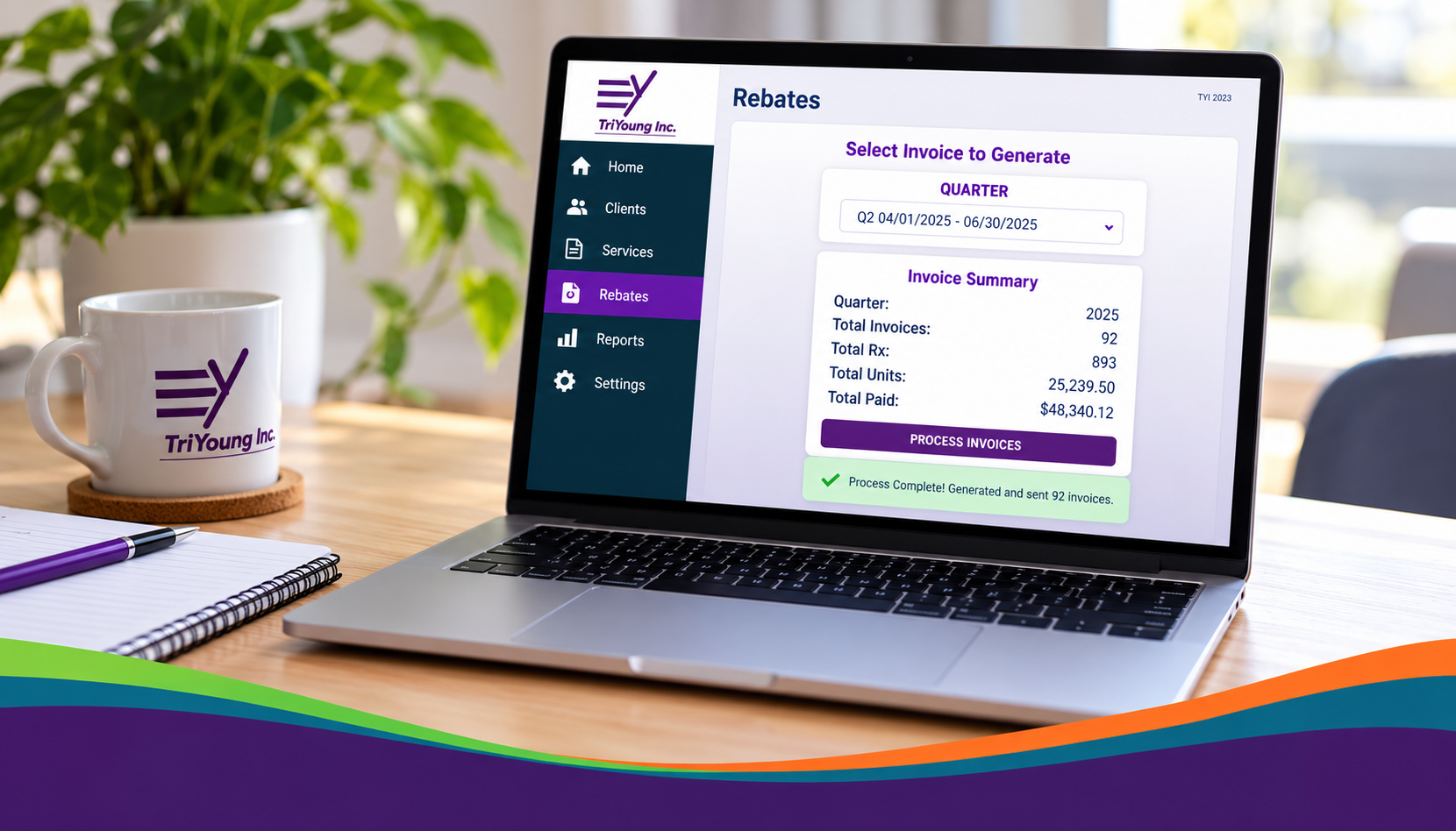
Users can select a complete quarter, and the system pulls applicable co-payment information from CAREWare. Before invoices are processed, an Invoice Summary provides an at-a-glance view of key information, including the total number of invoices, prescriptions (RX), units, and paid rebate amounts.
This gives staff an opportunity to review the quarter before moving forward with invoice generation.
Identify Data Issues Before Processing
A rebate process is only as effective as the data behind it.
RMS helps bring potential issues to the user’s attention before invoices are processed. For example, the system identifies situations in which an NDC code is associated with multiple drug names so that the underlying CAREWare data can be reviewed and corrected.
The system also displays Skipped Records, including records without a mapped labeler or those with a dollar amount of zero or less.
By making these exceptions visible within the workflow, staff have a clearer picture of what may require attention.
Stay Current with Medicaid Labeler Data
Keeping labeler information accurate and up to date is an important part of the rebate process. TriYoung’s Rebate Management System helps take the manual work out of maintaining this information.
RMS connects directly to data.medicaid.gov through its API. Each time a Summary or Invoice is generated, the system automatically retrieves the latest information published by Medicaid.gov and updates labeler information accordingly.
This integration helps ensure users are working with the most current labeler data available at the time of processing, without having to manually research and update that information before each rebate cycle.
Combined with RMS exception handling—which identifies records without a mapped labeler or records that do not have an amount to rebate—this provides another layer of support for a more accurate and efficient rebate workflow.
Generate and Distribute Invoices
Once the data has been reviewed, users can process the rebate invoices directly through RMS.
The system generates the applicable invoices and provides confirmation when processing is complete.
This helps create a more consistent workflow for moving from quarterly data review to invoice generation.
Maintain a Clear Rebate History
Rebate management doesn’t end when an invoice is generated.
RMS includes a Rebate History that allows users to review previously sent invoices by quarter. Users can select an individual record to see more detailed invoice line-item information.
Need to send an invoice again? The system also includes the ability to resend an invoice associated with a specific record.
This gives organizations a centralized place to reference previous rebate activity rather than relying on separate processes to reconstruct what happened during an earlier quarter.
Track Payments Along the Way
RMS also provides the ability to record payment information for record-keeping purposes.
Users can enter the payment method and payment amounts, helping maintain information about payments alongside the corresponding rebate records.
Designed to Reduce Administrative Burden
The goal of the Rebate Management System is straightforward: to give teams a clearer, more manageable way to move through the rebate process.
By bringing quarterly data selection, current Medicaid labeler information, exception identification, invoice generation, rebate history, and payment tracking into one centralized workflow, RMS helps organizations reduce manual administrative steps while improving visibility throughout the rebate process.
It is another example of TriYoung’s broader approach to technology: understanding an organization’s workflow first and then developing solutions designed around how teams need to work.
Ready to Learn More?
If your organization is interested in simplifying its rebate management process, we would be happy to show you how the TriYoung Rebate Management System works.
About the Author: Lisa Alaniz